
> **Review note (2026-10-21):** This walkthrough originally found a Universal Analytics (UA) container next to a GA4 one. Universal Analytics stopped processing data on July 1, 2023, and properties were shut down and deleted from the week of July 1, 2024 ([Google Analytics Help](https://support.google.com/analytics/answer/11583528)). GA4 with the Google tag is the only setup left. The duplicate check below now looks for what can still go wrong: the same GA4 tag configured twice.
Ensuring that your Google Analytics is set up correctly is crucial for accurately tracking your website's traffic. While the Realtime report in Google Analytics provides immediate data about active users on your site, it doesn't guarantee the absence of issues like duplicate tracking codes, which can distort your data significantly.
To accurately check your website for such discrepancies, Google offers a powerful tool: the **Google Tag Assistant**. This tool is not just a basic checker; it's an essential instrument for anyone serious about accurate data analytics.
## How to Use Google Tag Assistant Tool
Google Tag Assistant allows you to identify and fix issues such as duplicate tracking codes, ensuring that your data reflects actual user behavior. Here's how you can use this tool to verify your Google Analytics setup:
1. **Access Tag Assistant**: Start by visiting [tagassistant.google.com](https://tagassistant.google.com).
2. **Choose Your Assessment Method**: You have two options: assess a domain directly on the site or use the Tag Assistant Companion browser extension in Chrome for a more integrated experience.
 3. **Add Your Domain**: Click the 'Add domain' button to start the assessment process for your specific domain.
 4. **Connect Your Domain**: After clicking 'Connect', your website will open in a new window. Don't close this window; it's crucial for the assessment process.
 5. **Review Installed Tags**: Return to the Tag Assistant tab to review the tags installed on your site. This is where you can see if you have any duplicate or incorrect implementations. When this post was first written, the example site still loaded a legacy UA container next to the **Google Analytics 4** one. That specific problem is gone, because UA no longer collects data. If you still find a `UA-` tag, check whether your GA4 property still depends on it before you remove it. Google says GA4 keeps using your UA tagging [only if your UA tags are still on your website](https://support.google.com/analytics/answer/11583528), and recommends replacing them with a Google tag, installed directly or through Tag Manager. Add the Google tag first, confirm GA4 receives data, then delete the `UA-` tag.
## What a duplicate looks like with GA4
The common duplicate today is one GA4 measurement ID (`G-…`) configured twice on a page. A typical cause is a hard-coded `gtag.js` snippet in the site template plus a Google tag in Google Tag Manager. Google notes that if you use Tag Manager, [you don't need to add gtag.js snippets to your site](https://developers.google.com/analytics/devguides/collection/ga4/tag-options), and warns that [the same Google tag configured two or more times on a page may cause duplicate data or mixed settings](https://support.google.com/analytics/answer/12329709?hl=en).
Check it without changing anything first:
1. In Tag Assistant, open one page. Check whether the same `G-` ID is listed more than once, and whether a single page load sends two `page_view` events.
2. Search your site template and your Tag Manager container for the same measurement ID.
If you find two, remove one implementation. Usually you keep Tag Manager and delete the hard-coded snippet. Then repeat the Tag Assistant check and confirm one `page_view` per page load. If you cannot remove one right away, Google's [Google tag management help](https://support.google.com/analytics/answer/12329709?hl=en) describes an option in the **Manage Google tag** section of the **Admin** tab: **Ignore duplicate instances of on-page configuration**. It ignores repeated on-page config commands, and Google enables it automatically when you combine two Google tags. Treat it as a stopgap; removing the duplicate is still the fix.
By following these steps, you're not just checking if Google Analytics is working; you're ensuring that it's working correctly. The Tag Assistant tool is a definitive way to verify your setup, giving you confidence in the data you're using to make important business decisions.
## Wrapping it up 👏
Accurate data is the cornerstone of effective web analytics. By utilizing the Google Tag Assistant, you're taking a crucial step toward ensuring the integrity of your data. Remember, in the world of analytics, precision matters. Don't just track; track correctly. Cheers to data-driven success!
Cheers! 🍺
Review note (2026-10-21): This walkthrough originally found a Universal Analytics (UA) container next to a GA4 one. Universal Analytics stopped processing data on July 1, 2023, and properties were shut down and deleted from the week of July 1, 2024 (Google Analytics Help). GA4 with the Google tag is the only setup left. The duplicate check below now looks for what can still go wrong: the same GA4 tag configured twice.
Ensuring that your Google Analytics is set up correctly is crucial for accurately tracking your website’s traffic. While the Realtime report in Google Analytics provides immediate data about active users on your site, it doesn’t guarantee the absence of issues like duplicate tracking codes, which can distort your data significantly.
To accurately check your website for such discrepancies, Google offers a powerful tool: the Google Tag Assistant. This tool is not just a basic checker; it’s an essential instrument for anyone serious about accurate data analytics.
How to Use Google Tag Assistant Tool
Google Tag Assistant allows you to identify and fix issues such as duplicate tracking codes, ensuring that your data reflects actual user behavior. Here’s how you can use this tool to verify your Google Analytics setup:
Choose Your Assessment Method: You have two options: assess a domain directly on the site or use the Tag Assistant Companion browser extension in Chrome for a more integrated experience.
3. Add Your Domain: Click the ‘Add domain’ button to start the assessment process for your specific domain.
4. Connect Your Domain: After clicking ‘Connect’, your website will open in a new window. Don’t close this window; it’s crucial for the assessment process.
5. Review Installed Tags: Return to the Tag Assistant tab to review the tags installed on your site. This is where you can see if you have any duplicate or incorrect implementations. When this post was first written, the example site still loaded a legacy UA container next to the Google Analytics 4 one. That specific problem is gone, because UA no longer collects data. If you still find a UA- tag, check whether your GA4 property still depends on it before you remove it. Google says GA4 keeps using your UA tagging only if your UA tags are still on your website, and recommends replacing them with a Google tag, installed directly or through Tag Manager. Add the Google tag first, confirm GA4 receives data, then delete the UA- tag.
In Tag Assistant, open one page. Check whether the same G- ID is listed more than once, and whether a single page load sends two page_view events.
Search your site template and your Tag Manager container for the same measurement ID.
If you find two, remove one implementation. Usually you keep Tag Manager and delete the hard-coded snippet. Then repeat the Tag Assistant check and confirm one page_view per page load. If you cannot remove one right away, Google’s Google tag management help describes an option in the Manage Google tag section of the Admin tab: Ignore duplicate instances of on-page configuration. It ignores repeated on-page config commands, and Google enables it automatically when you combine two Google tags. Treat it as a stopgap; removing the duplicate is still the fix.
By following these steps, you’re not just checking if Google Analytics is working; you’re ensuring that it’s working correctly. The Tag Assistant tool is a definitive way to verify your setup, giving you confidence in the data you’re using to make important business decisions.
Wrapping it up 👏
Accurate data is the cornerstone of effective web analytics. By utilizing the Google Tag Assistant, you’re taking a crucial step toward ensuring the integrity of your data. Remember, in the world of analytics, precision matters. Don’t just track; track correctly. Cheers to data-driven success!

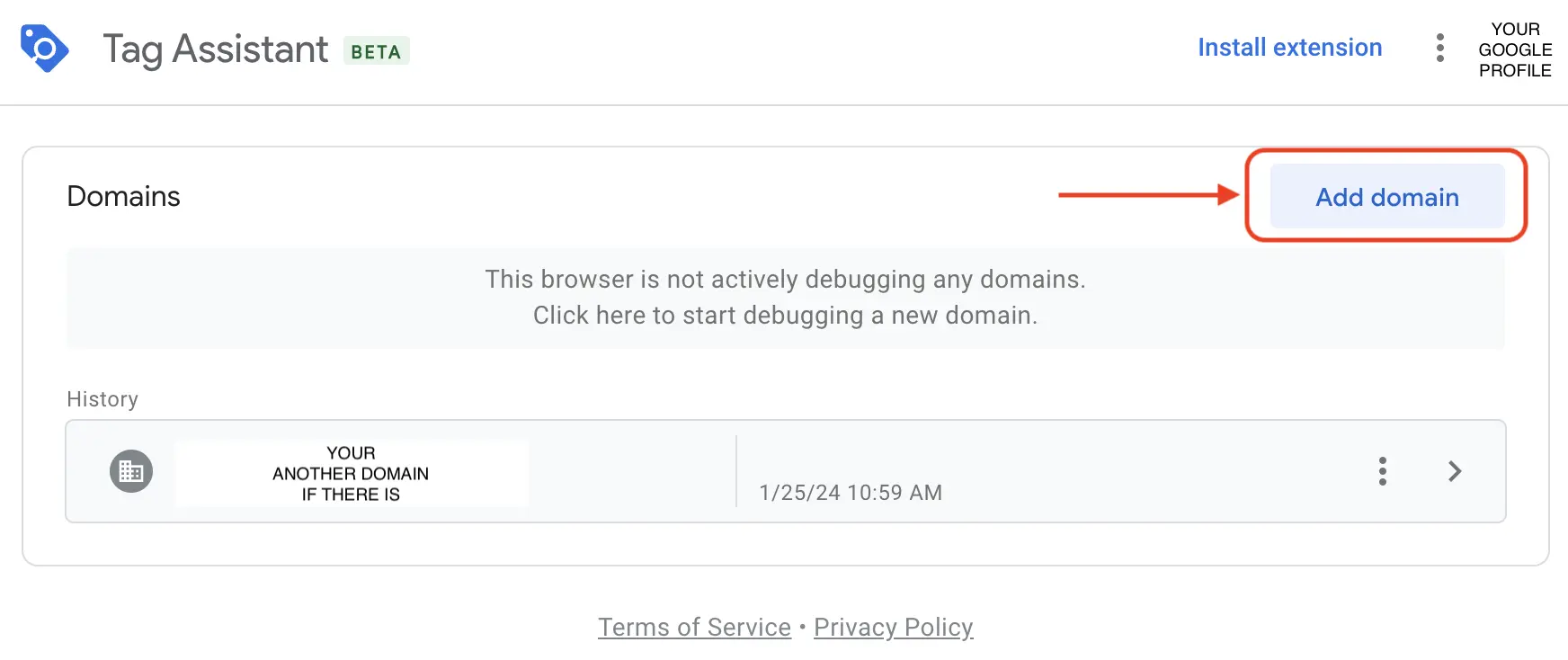 3. Add Your Domain: Click the ‘Add domain’ button to start the assessment process for your specific domain.
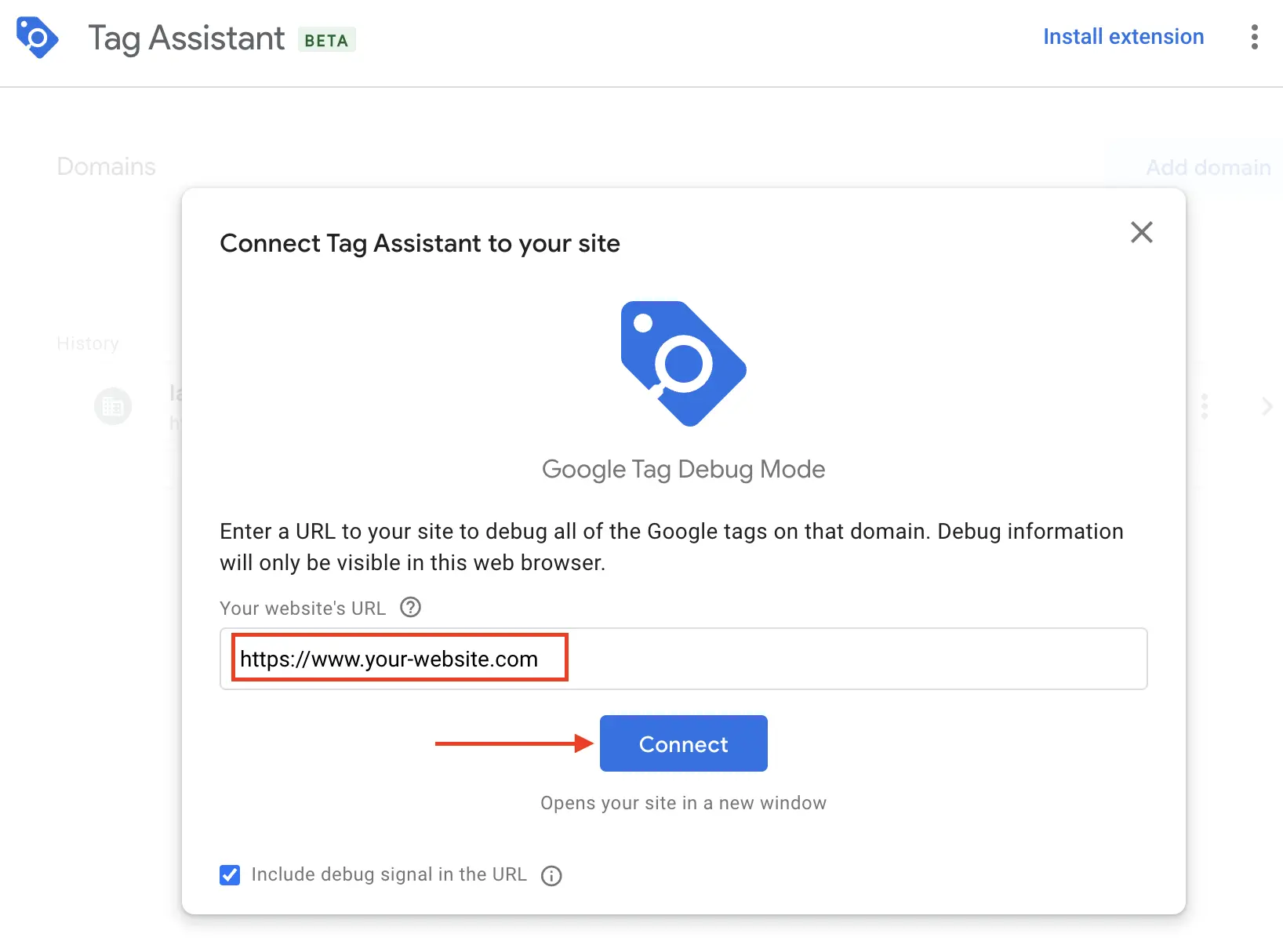 4. Connect Your Domain: After clicking ‘Connect’, your website will open in a new window. Don’t close this window; it’s crucial for the assessment process.
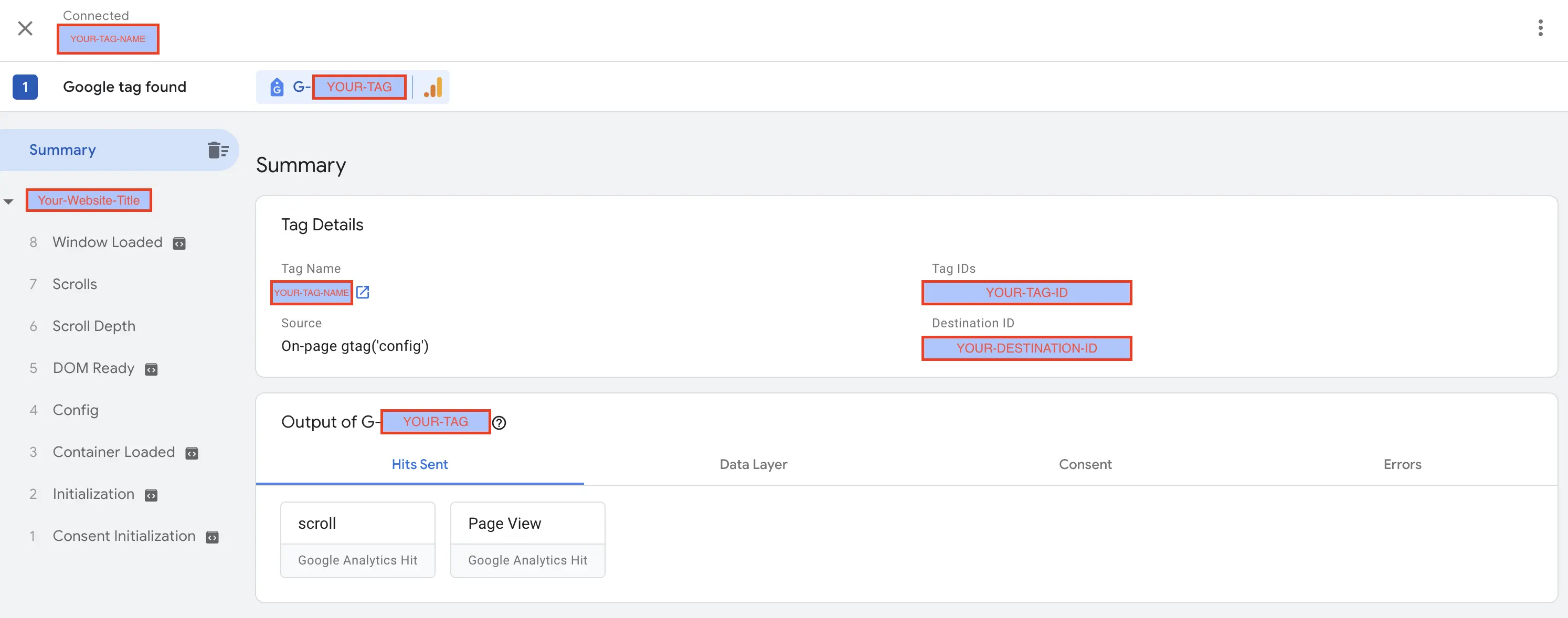 5. Review Installed Tags: Return to the Tag Assistant tab to review the tags installed on your site. This is where you can see if you have any duplicate or incorrect implementations. When this post was first written, the example site still loaded a legacy UA container next to the Google Analytics 4 one. That specific problem is gone, because UA no longer collects data. If you still find a